
Pencil Flat Iron vs Regular Flat Iron: Plate Width Explained
 By Ashley Rubell Published
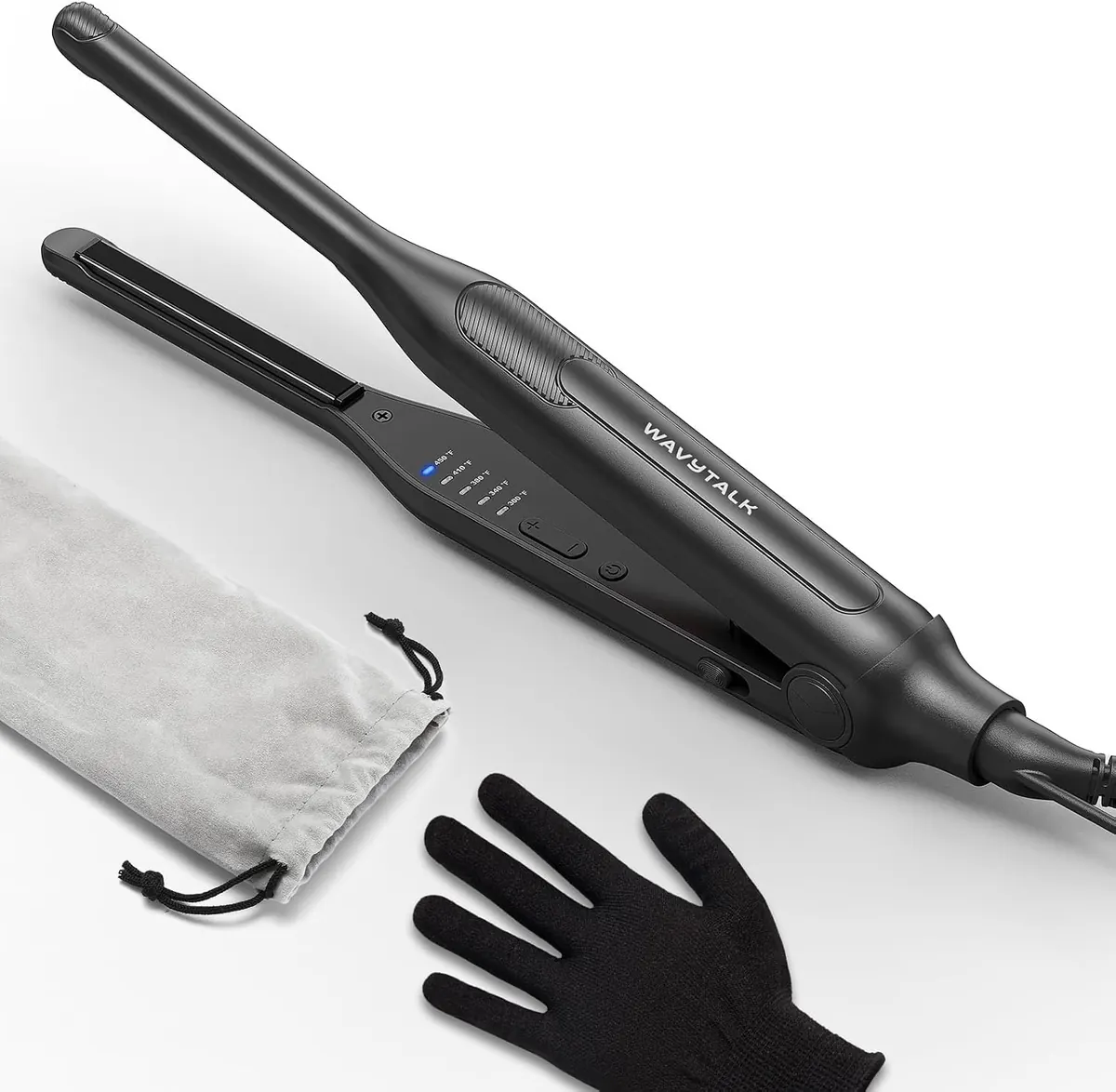
Slim 0.3" ceramic pencil iron for short hair, pixie cuts, and bangs, with five heat
Shop now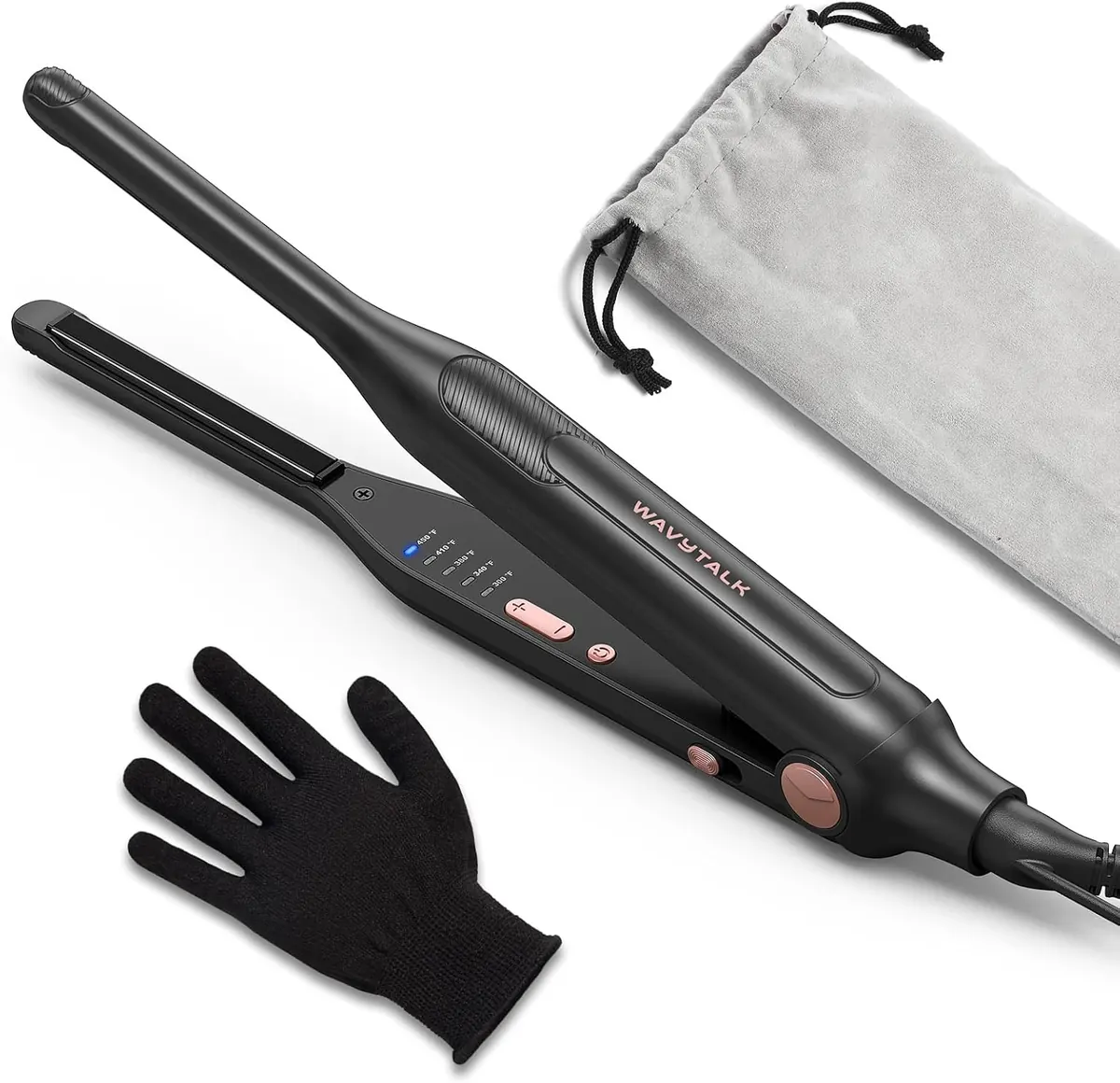
Reach for the 0.3" Pencil Flat Iron when the job is roots, bangs, a pixie cut, or short sections a standard plate cannot get into. Reach for the Titanium Flat Iron when you want a regular 1 in (25 mm) straightener that also curls longer hair. Both irons heat in about 15 seconds and both climb to about 450°F. The useful difference is plate width, plate material, and how many passes a full head will take.
Plate width at a glance
Swipe sideways to see the whole table →
| 0.3" Pencil Flat Iron | Titanium Flat Iron | |
|---|---|---|
| Plate width | 0.3 in (7.6 mm) ceramic | 1 in (25 mm) pure titanium |
| Heat | Five settings, about 300°F–450°F | LCD about 170°F–450°F; presets 270°F, 350°F, 410°F |
| Heat-up | PTC, about 15 seconds | PTC, about 15 seconds |
| Built for | Short hair, pixie cuts, bangs, beards | Everyday straighten-and-curl on all hairstyles |
| Plate design | 3D floating plates, curved rounded edges, anti-pinch | Round-edge 3D floating plates |
| Extras | Heat-resistant glove and heat-proof travel pouch; 10.72 oz (304 g) | Dual voltage 100–240V, 60-minute shut-off, safety lock |
| Weak fit | Full-head passes on long, thick hair | Close work on a pixie, bangs, or hairline |
What a pencil iron is actually for
Wavytalk calls this the narrowest iron it makes. The 0.3 in (7.6 mm) ceramic plates are there to reach what a regular 1 in (25 mm) iron misses: roots, edges, bangs, and a pixie cut. The brand also lists men's beards. Ceramic floating plates are meant to glide and keep even contact. Curved, rounded edges support small bends and crease-free detail curls, which is a different job from large wand spirals.
Five heat settings span about 300°F to 450°F. Start lower on fine or fragile hair and only climb if a short section will not relax. The PTC heater is ready in about 15 seconds. An anti-pinch design is on the published feature list; keep that orientation in mind around fine hairlines. In the box you get the iron, a heat-resistant glove, and a heat-proof travel pouch.
Wavytalk notes that the floating plates may leave a slight gap when the iron is closed. Press a little firmer for full contact rather than assuming the plates are damaged. The brand does not publish a voltage range for this model, so read the label before you pack it for a trip abroad.
This is the wrong iron for long, thick hair every morning. Too many skinny passes waste time. For that work, the 1 in titanium iron is the regular plate. The pencil iron has no steam tank and no vent system, so start on clean, dry hair.
A short how-to lives in how to use the Wavytalk pencil flat iron: small sections, glide close to the root to straighten, or turn the iron as you move for a small bend. Wear the glove on the hand that holds hair near the face.
What a regular 1-inch iron is built to do
On this site, the everyday “regular” flat iron is the Titanium Flat Iron. It uses 1 in (25 mm) pure titanium plates with rounded edges and 3D floating contact, so one tool can straighten and curl. Wavytalk frames it for all hairstyles. The LCD lets you set about 170°F to 450°F, and a “P” button jumps to 270°F, 350°F, or 410°F. That low end is useful on fine or color-treated hair; the top of the range is reserved for coarse, resistant hair.
Heat-up is again about 15 seconds. Dual voltage 100–240V covers travel once you add the plug adapter your destination needs. A 2.5 m (8.2 ft) swivel cord, a 60-minute auto shut-off, and a safety lock are on the published list. Wavytalk lists a 2-year warranty for this model.
Clamp a roughly 1 in section and glide in one steady pass. To curl, give the iron a half turn away from your face and move slowly to the ends. A longer walkthrough is in how to use the Wavytalk titanium flat iron. This is a dry-plate tool with no steam and no vents, so damp hair still needs drying first.
Which width to buy
- Is the daily job a pixie, bangs, beard, or root and hairline cleanup? Buy the pencil iron.
- Do you straighten or curl shoulder-length or longer hair most days? Buy the 1 in titanium iron.
- Do you already own a regular iron and only fight pieces it cannot reach? Add the pencil iron as the detail tool.
- Do you travel and need a known voltage range? The titanium iron publishes 100–240V; the pencil iron does not.
- Do you also want cool airflow while you form a curl? Look at the Cool Curl Pencil.
You do not need both unless your routine splits into full-head passes plus short-hair detail. For a wider map of tools, use how to choose Wavytalk hair tools and the Wavytalk review hub. More irons sit under Straighteners.
Care that differs
Let either iron cool fully before storage. Slide the pencil iron into its heat-proof pouch; at 10.72 oz (304 g) it packs easily once cool. On the titanium iron, use the safety lock so the plates stay closed, and do not wrap the swivel cord around a hot tool. Wipe plates only when they are cool.
Bottom line
Plate width decides the purchase. The 0.3 in (7.6 mm) ceramic pencil iron is a detail tool for short hair, bangs, roots, and beards. The 1 in (25 mm) titanium iron is the regular flat iron for full-head straightening and wrap-and-curl passes, with a wider heat floor and published dual voltage.